
If the word teppanyaki sounds familiar but you aren’t quite sure what it means, you are not alone. In recent years, the term has become much more visible thanks to the rise of Asian culture and a growing curiosity about Japanese gastronomy. However, a very common question remains: what exactly is teppanyaki?
As a professional in gastronomy and haute fusion cuisine, I encounter this situation often. At Katagi Blau in Palma de Mallorca, teppanyaki is one of our specialties. I frequently meet diners who have heard the word and associate it with a sophisticated experience but still don’t fully understand what it consists of, which ingredients are used, or what sets it apart from other Japanese culinary styles.
The reality is that teppanyaki is not just “Japanese food made on a griddle.” That definition falls short. Behind it lies a technique, a specific way of handling the product, an understanding of the service rhythm, and a culinary philosophy where precision is paramount. When explained correctly, something interesting happens: many people move from simple curiosity to a genuine desire to experience it.
In this article, I will explain what teppanyaki is, its origin, the ingredients typically used, and why this Japanese technique has conquered palates both inside and outside of Japan. I will also share what makes it special from a professional perspective, because understanding teppanyaki isn’t just about knowing a definition—it’s about understanding the complete experience behind it.
What is Teppanyaki exactly?
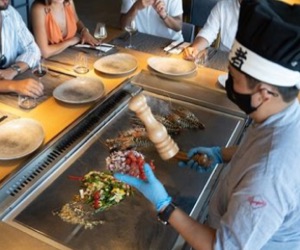
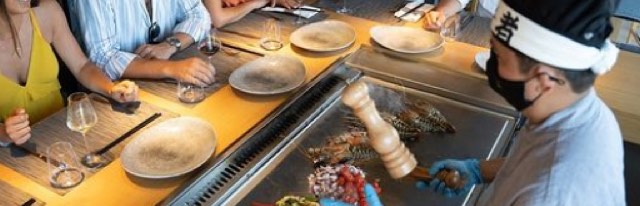
Teppanyaki is a Japanese cooking technique that consists of preparing food on a hot iron griddle. This plate allows for cooking meats, seafood, fish, vegetables, rice, or noodles with great temperature control, which is essential for respecting textures, juiciness, and flavor. It is a way of cooking on a hot metal surface, usually in front of the customer, with precise execution and absolute focus on the product.
However, there is an important nuance. Although many people identify it only with an entertaining meal or the chef’s performance, teppanyaki goes far beyond the “show.” While the visual aspect is attractive, the essence lies in the technique. The griddle is used because it allows the chef to work each ingredient to its exact point, regulate cooking times quickly, and serve the food at its absolute peak.
In our daily practice at the restaurant, many guests arrive thinking teppanyaki is merely a “lively dinner format,” when in reality, it is cuisine first and experience second. Without technique, temperature control, and product knowledge, there is no good teppanyaki, no matter how flashy the performance.
Book your Teppanyaki experience at the best rooftop in Palma
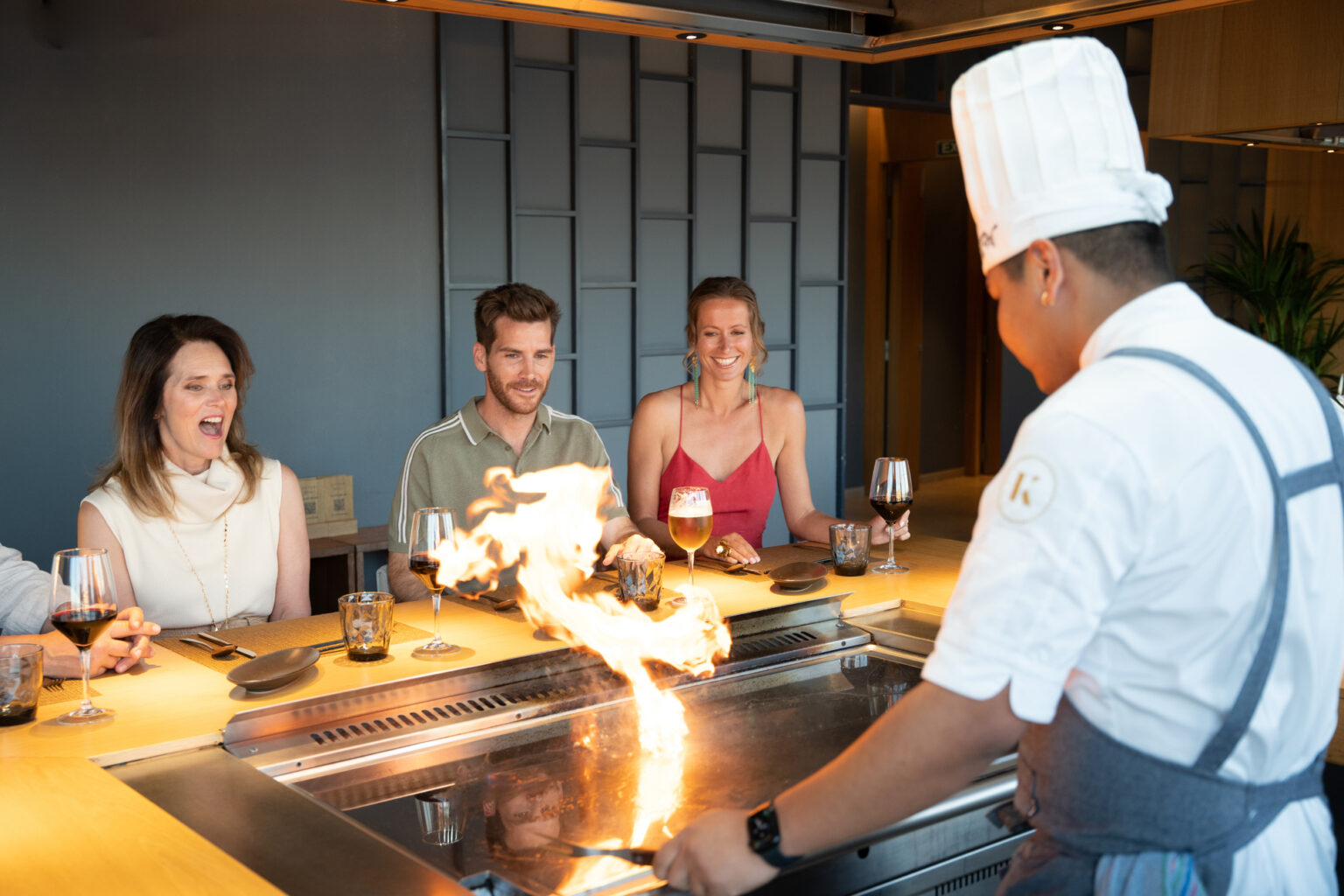
Is it a dish or a cooking technique?
This is one of the most common misconceptions. Teppanyaki is not a specific dish, but a technique or style of cooking. In other words, we are not talking about a closed recipe with fixed ingredients, but a way of cooking various products.
That’s why you can find beef, seafood, vegetable, rice, or chicken teppanyaki, as well as more creative combinations. What defines teppanyaki is not a single ingredient, but the cooking on the iron plate and the way the chef organizes timing, cuts, temperature, and the service sequence.
What does Teppanyaki mean?
Etymologically, teppanyaki literally means “grilling or cooking on an iron plate.”
The word is composed of two Japanese elements:
-
Teppan: Iron plate.
-
Yaki: Grilled, cooked, or pan-fried.
The meaning of Teppan and Yaki
In Japanese gastronomy, many words describe not just an ingredient or a tool, but a way of cooking. Yaki appears in various Japanese dishes related to heat or direct cooking.
In a well-executed teppanyaki kitchen, the griddle becomes a precision tool. Each ingredient enters at the right time, is moved just enough, seared as needed, and served at the exact moment. That is the great difference between simply using a griddle and truly cooking “Teppanyaki style.”
The origin of Teppanyaki
Teppanyaki has Japanese roots, but its contemporary evolution is closely linked to how Japanese cuisine adapted and projected itself internationally. In Japan, cooking on hot surfaces is part of a broader culinary tradition focused on respect for the product.
Over time, teppanyaki developed its own identity and became especially popular outside of Japan for its ability to combine two things that work perfectly together: quality cuisine and a live experience. This combination made it a highly attractive proposal for restaurants looking to offer a memorable moment.
You can learn more about our specific menu in our Teppanyaki Show Cooking in Palma section.
Common ingredients in Teppanyaki
One of the advantages of teppanyaki is its versatility. Many ingredients can be used, provided they make sense within a fast and controlled cooking environment. The most common include:
-
Meats such as beef (wagyu or sirloin) or chicken.
-
Seafood and fish.
-
Varied vegetables.
-
Rice or noodles.
-
Light sauces and seasonings that accompany without masking the product.
This technique leaves little room to hide mistakes. If the ingredient is not high quality, it shows. If the cooking point is off, it shows. Teppanyaki demands culinary honesty; the quality is completely exposed.
Differences between Teppanyaki, Teriyaki, and Hibachi
-
Teppanyaki is a cooking technique on an iron plate.
-
Teriyaki usually refers to a type of glaze or preparation, associated with a shiny, savory-sweet sauce.
-
Hibachi relates to a different type of heating system or charcoal grill.
While these terms are sometimes used interchangeably in casual conversation, they technically refer to different ways of cooking and presenting the culinary experience.
Discover Teppanyaki at Katagi Blau
At Katagi Blau, we see time and again that many guests arrive with interest but without clear information. They have heard the term and are attracted to the aesthetic, but they don’t yet know the precision behind the cooking or why the chef plays such a central role.
Explaining what teppanyaki is helps us educate our guests and connect their curiosity with a real, world-class experience. When someone understands that it is not just a griddle, but a precise, elegant, and “living” kitchen, they are much closer to truly enjoying it.
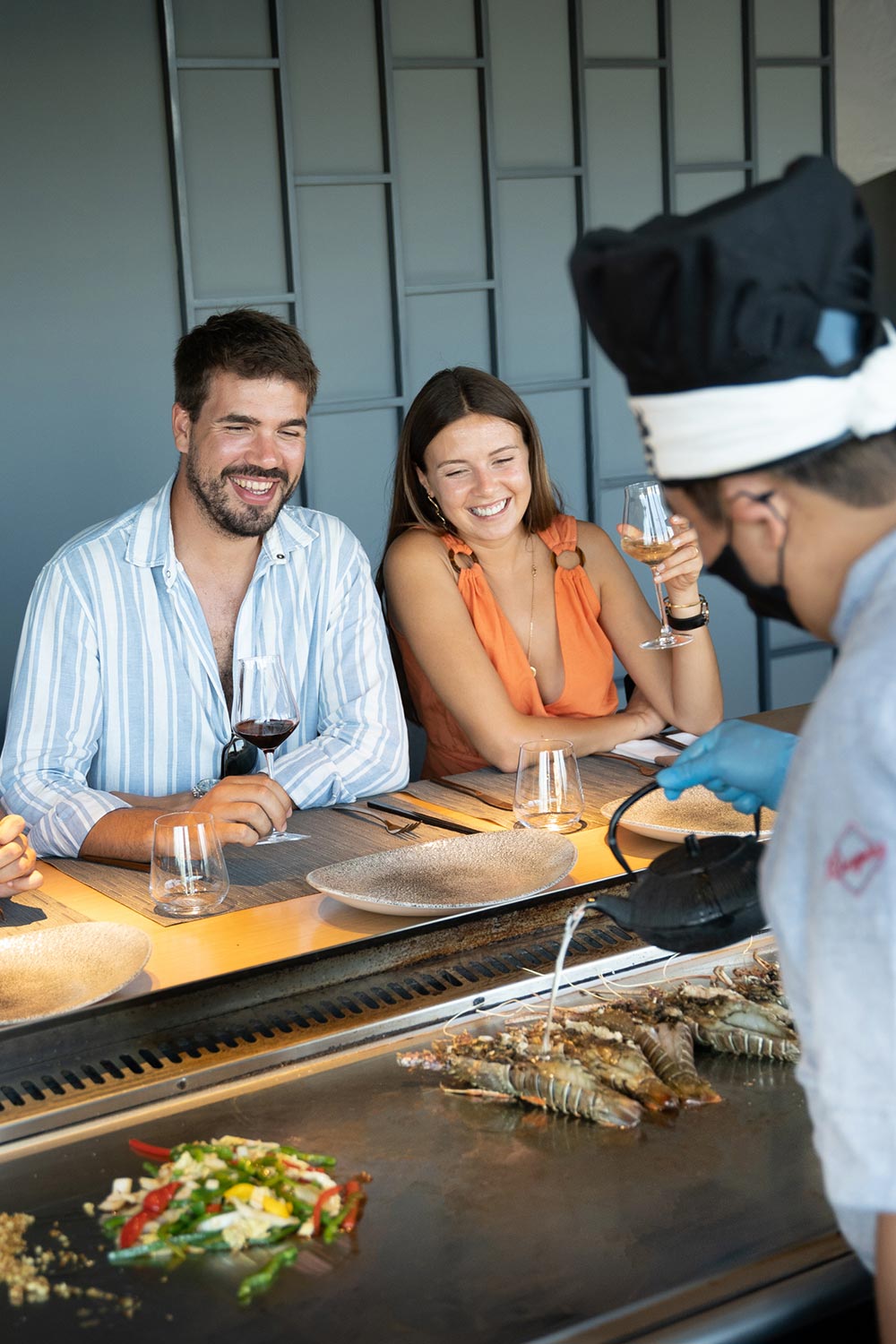
Frequently Asked Questions (FAQ)
What is teppanyaki?
It is a Japanese cooking technique where food is prepared on a hot iron griddle. It highlights precision and focuses on meats, fish, and vegetables.
Does teppanyaki mean a specific dish?
No. It is a style of cooking that can be applied to many different ingredients.
What is the difference between teppanyaki and teriyaki?
Teppanyaki describes the method (iron plate), while teriyaki describes the finish (a specific glazed sauce).
Is teppanyaki healthy?
Yes, it can be very healthy as it allows for fast cooking with fresh products, using minimal fats and preserving the nutrients of the ingredients.