
Brunch is a meal eaten in the late morning or around midday, usually at the weekend, that brings breakfast and lunch together at one table. What makes a brunch good isn’t the time you sit down, but what happens while you’re sitting there.
In other words, it isn’t a late breakfast or an early lunch. It’s a meal with its own rhythm and, when it’s done well, with cooking that justifies it. Everyone roughly knows what the word means, but few know when it starts, what should be on the table, or why some brunches stay with you while others are forgotten before the bill arrives. Let’s take it step by step.
Brunch meaning: where the word comes from
Brunch blends two English words: breakfast and lunch. It takes the start of the first and the end of the second, and the name explains the idea before you’ve even sat down.
The origins of brunch
The first mention usually cited is an essay called Brunch: A Plea, published in 1895 in the British magazine Hunter’s Weekly and attributed to the writer Guy Beringer. In it, Beringer argued for a late, relaxed Sunday meal as an alternative to the heavy lunch after church. Punch magazine picked up the term the following year, in 1896, helping it spread among British readers.
There’s at least one other mention from the same year in the United States, which casts doubt on the word being Beringer’s alone. What is clear is that the idea caught on on both sides of the Atlantic, and that it was in the United States, from the 1930s onwards, that the format became popular and turned into what we know today.
What time is brunch?
Brunch is usually eaten between 11 am and 3 pm, and restaurants tend to focus service around midday. It’s almost always a weekend thing and, within the weekend, Sunday is its natural home: it’s the day nobody is in a hurry to leave the table.
In Mallorca that logic is especially clear. The island’s Sunday rhythm, slower and built around enjoying a good meal, suits a meal that’s in no rush to start or finish. If you’re looking for ideas to plan the day, have a look at what to do on a Sunday in Mallorca.
What to eat and drink at brunch
This is what varies most from place to place, but there’s a core you’ll find on almost every brunch menu:
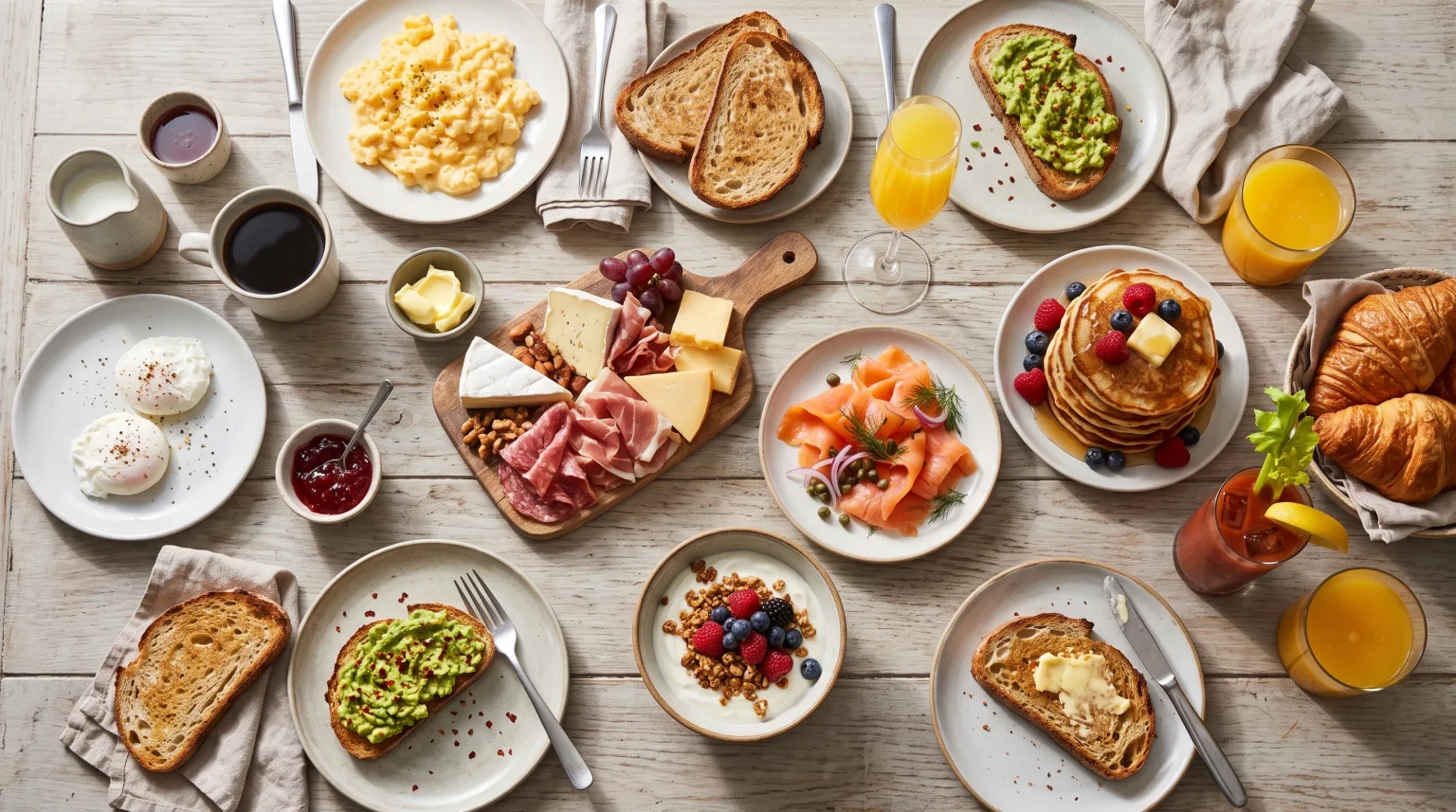
- Savoury: eggs in different styles (scrambled, poached, baked), toast with all kinds of toppings, cured meats and cheeses, smoked salmon, salads and a hot dish or two that’s closer to lunch than breakfast.
- Sweet: pastries, pancakes, fresh fruit and yoghurt, which keep the link with breakfast.
- Drinks: coffee, juices and, in many restaurants, a cocktail or a glass of cava.
Local produce makes the difference when it appears. In Mallorca, sobrassada or an ensaïmada feel right at home on a Sunday table; if you’d like to know more about the island’s produce, our guide to what to eat in Mallorca is a good place to start.
Drinks are where brunch shows most personality. The mimosa, cava or champagne with orange juice, is the most widespread brunch cocktail, and the bloody mary, vodka with tomato juice and spices, is the other classic. In many places they’re part of the offer from the start.
Types of brunch: at home, à la carte, buffet and bottomless
Brunch at home is the freest version: you choose the time, the dishes and the pace. It works if the shopping is good and nobody’s in a hurry; the downside is that whoever cooks takes a while to sit down.
À la carte brunch in a restaurant offers a selection of dishes that each guest chooses. It’s the most common format in places with their own kitchen: each dish arrives when it’s ready, and the table has time to linger.
At a brunch buffet, the dishes are laid out together and everyone helps themselves at their own pace. It works well in large spaces and for groups, although the result depends heavily on the quality of what’s on offer.
Bottomless brunch, hugely popular in the UK, includes unlimited drinks for a set time. We explain it in the FAQs below.
When brunch has a character of its own
Here’s something rarely said that’s worth saying: brunch has become a very repetitive format. The same avocado toast, the same eggs Benedict, the same menu that could be in any city. The problem isn’t the ingredients, it’s the lack of judgement. When the kitchen has nothing to say, brunch becomes a late breakfast at lunch prices, and the idea that “all brunches are the same” stops being a prejudice and becomes a fairly accurate observation.
A brunch has character when the cooking behind it has its own logic: a product, a technique or a combination you wouldn’t find next door.
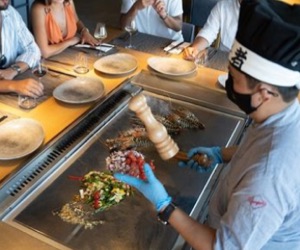
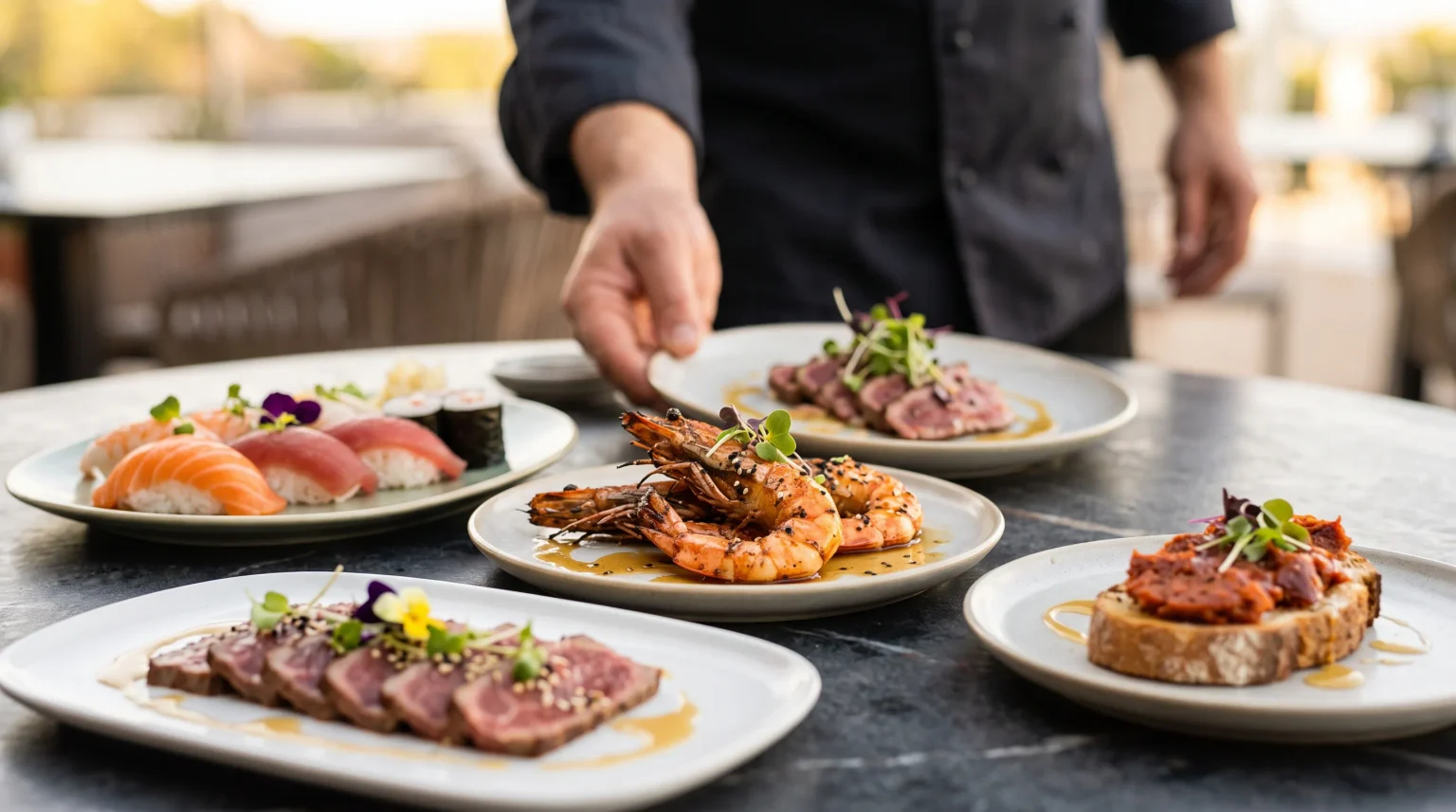
That’s what defines the Sunday brunch at Katagi Blau: Asian-Mediterranean fusion cooking with a Mallorcan base and Japanese touches, a selection that includes sushi, beef dishes and prawns, and the restaurant’s rooftop overlooking the Bay of Palma. Not sure how a nigiri differs from an uramaki? We explain it in our guide to the types of sushi. It isn’t a generic menu with a view: the cooking has something to say and the view is the setting, not the argument. Part of that character lies in how Japanese cooking builds flavour from the ground up, which makes more sense once you know about umami and what it does on the plate.
If you’d like to see what it’s all about, here’s our Sunday brunch in Palma.
Brunch FAQs
How is brunch different from breakfast?
Breakfast is the first meal of the day, usually light and quick. Brunch is eaten later, combines sweet and savoury dishes that can include lunch-style cooking, and often comes with a cocktail or a glass of something. The difference isn’t just timing but intent: breakfast gets you ready for the day, while brunch is the plan for the day.
What do you drink at brunch?
Coffee, tea and juice are the basics. But what defines brunch most is the glass in hand: a mimosa, a bloody mary, an aperol spritz or a glass of cava. Not every restaurant includes them, but they’ve been part of the format for decades. The point isn’t drinking for its own sake, but having a drink that goes with a table that’s in no hurry to get up.
What is a bottomless brunch?
It’s a format that pairs a meal with unlimited drinks, usually prosecco or cava, beer or cocktails, for a set time, typically around an hour and a half to two hours. It’s hugely popular in the UK and has spread to destinations with lots of British visitors. Not every restaurant that serves brunch offers it, so it’s worth checking before you book.
Do you need to book Sunday brunch?
Generally, yes, especially if the restaurant has a terrace or rooftop and the weather is good. Sunday lunchtime is one of the busiest slots in hospitality, and places with a distinctive offer tend to fill up in advance. You can see how to book on the page for our Sunday brunch.
Brunch is a meal, not a time slot
Brunch isn’t a marketing label or an excuse to charge more for eggs. It’s a meal that makes sense when it’s eaten slowly and when there’s real cooking behind it. If what’s on the table could be anywhere, the time of day won’t save it; if the kitchen has something to say, the format gives it all the room it needs.
That’s what’s worth looking for: not the most photographed brunch, but the one you remember for what you ate. And if you’re planning a Sunday for two, you’ll find more ideas in our couple plans in Mallorca.